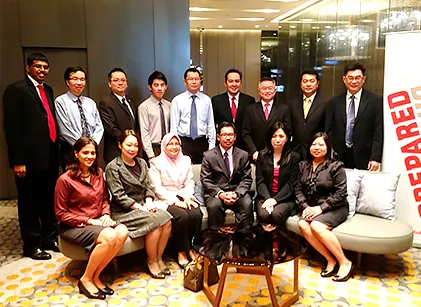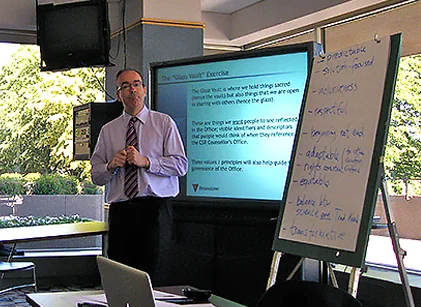

InterPraxis Director delivers keynote lecture in Tokyo on building responsible supply chains.

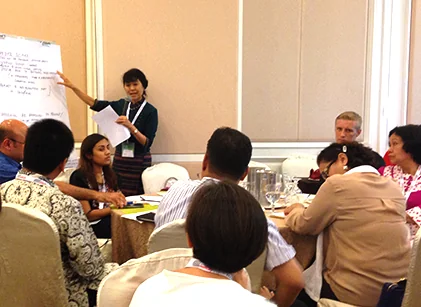
As Tokyo prepares to host the 2020 Olympics and awareness of frameworks like the SDGs and other codes for international supply chains grow, many businesses are keenly interested in learning best practice in this area. InterPraxis was invited to deliver a workshop to share emerging best practice and demonstrate how Japanese businesses can develop and implement effective systems to ensure responsible and sustainable supply chains, and address key ESG risks.

Building responsible supply chains requires cooperation and collaboration with suppliers to ensure that they have critical sustainability/ responsibility strategies in place so that they can reduce sustainability risks and create ongoing improvements in their social and environmental performance. It is especially important to focus on high-risk suppliers, for example from industries that are known to face particular challenges, or from countries where national legislation and internationally recognised principles for human rights and labour rights, the environment and anti-corruption, are not fully respected. This is not always easy but as InterPraxis demonstrated developing a robust responsible supply chain management system will go a long way to help you achieve these goals.

If you would like to perform a quick diagnosis to assess how responsible your current supply chain is, we invite you to try our free on-line assessment tool:


CLICK HERE FOR OUR FREE ONLINE SUSTAINABLE SUPPLY CHAIN ASSESSMENT TOOL.


Click below for our video on sustainable supply chains:
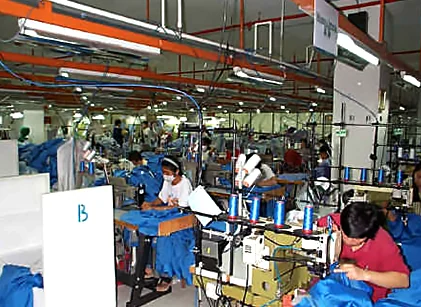


Ensuring Responsible Supply Chains: InterPraxis helps Lululemon address the issue of Foreign Migrant Workers

Based on emerging best practice and input from key stakeholders, InterPraxis helped Lululemon develop its new foreign migrant labour standard as part of its Vendor Code of Conduct. The new standard will help Lululemon and its vendors address risks of exploitive labour practices among migrant workers and imposes a new framework on it suppliers for outsourcing foreign migrant labourers that include specific safeguards against trafficking and forced labour.

Foreign migrant workers continue to be at risk for rights violations through their recruitment and during their employment. In particular, the recruitment and employment practices of suppliers and labor agents puts foreign migrant workers at risk for forced labor. Given the variation in practices by suppliers and labor agents in managing these workers, a universal and codified approach in this area can help organizations to clarify their standards with their vendors and drive their enforcement throughout their supply chain. This is what we have sought to achieve with this project.

InterPraxis Director selected by ISO Academy to deliver regional trainings on the new ISO 37001 standard.

Bribery continues to be one of the world’s most destructive and challenging issues. With over US$ 1 trillion paid in bribes each year*, the consequences are catastrophic, reducing quality of life, increasing poverty and eroding public trust. Recognizing this, ISO developed a new standard to help organizations fight bribery and promote an ethical business culture.

ISO 37001, Anti-bribery management systems, specifies a series of measures to help organizations prevent, detect and address bribery. It is designed to help organizations implement an anti-bribery management system, or enhance the controls you currently have. It helps to reduce the risk of bribery occurring and can demonstrate to your stakeholders that you have put in place internationally recognized good-practice anti-bribery controls.

ISO 37001 can be used by any organization, large or small, whether it be in the public, private or voluntary sector, and in any country. It is a flexible tool, which can be adapted according to the size and nature of the organization and the bribery risk it faces.

The standard was developed over a period of years with the help of stakeholders from around the world which included the active participation of InterPraxis throughout its development.

InterPraxis, together with BNQ, helps to deliver the world’s first ASI audit certification.

The independent third party audits were carried out by BNQ (Bureau de Normalisation du Québec) together with the support of InterPraxis Director, David Simpson who was one of the first accredited auditors to be recognized by the ASI

The ASI Certification program was developed through an extensive multi-stakeholder consultation process and is the only comprehensive voluntary sustainability standard initiative for the aluminium value chain. Rio Tinto is a founding member of ASI and is the first company in the world to achieve ASI Certification. The independent, third-party audits were carried out by BNQ (Bureau de Normalisation du Québec), which was the world’s first firm to be accredited by ASI.

The ASI Certification program was developed through an extensive multi-stakeholder consultation process and is the only comprehensive voluntary sustainability standard initiative for the aluminium value chain. Rio Tinto is a founding member of ASI and is the first company in the world to achieve ASI Certification.

The Aluminium Stewardship Initiative (ASI) is a non-profit standardization and certification body, bringing together major international stakeholders in the aluminium value chain, with a commitment to maximizing the contribution of aluminium to sustainable development. For more information on ASI and the certification please go to: https://aluminium-stewardship.org/

InterPraxis leads harmonization project among MDB international accountability (complaint) mechanisms.

This framework is intended to serve as a foundation for a quality management standard that would embed a quality management system within IAMs, increasing productivity and efficiency while ensuring quality of processes and outputs. It also underlines the importance of an effective complaints handling system within an organization and provide assurance for users that their complaints are taken seriously and that they are being treated properly, fairly and impartially.

A quality standard would help to ensure that IAM principles are effectively embedded into the practices and procedures of the mechanisms and also help to underline and safeguard the qualities of good practice when IAMs come under attack from their stakeholders as well as from the agencies and bodies that govern and fund them.

A standard would also open up the possibility for organizations to fine-tune and benchmark their performance and better manage the risks they face while enhancing their own accountability to stakeholders.

InterPraxis Director accepts interim appointment to head EBRD’s Independent Accountability Mechanism

Independent accountability mechanisms (IAMs) have a common goal: to strengthen devlopment outcomes, by providing individuals and communities with an independent, impartial and transprent channel to address their social and environmental concerns.

IAMs like EBRD’s Project Complaint Mechanism achieve this through different services such as dispute resolution platforms or investigations to ensure that the banks are in compliance with their social and enviornmental policies.

The existence of independent accountability mechanisms reflect the commitment of the various international financial institutions to sustainable development and to give people a voice when their rights and/or interests are affected – and to meet the highest standards of transparency and accountabiliy.

International Experts Group Meeting on UN Guiding Principles Facilitated by InterPraxis.

InterPraxis Director was invited by the UN Working Group on Business and Human Rights and the Office of the Extractive Sector CSR Counsellor to facilitate an international workshop on Business Impacts and Non-Judicial Access to Remedy which will help to establish global best practice.

UN-backed PRI selects InterPraxis to develop framework for implementing UNGPs

InterPraxis was invited to work with the Investor members of the Principles for Responsible Investment (PRI) to help develop a framework for assessing the implementation of the UN Guiding Principles on Business and Human Rights (UNGPs) within the extractive sector. This initiative worked with both investors and companies to identify best practices and challenges in this area and recommended a performance framework to assess implementation of the UNGPs.

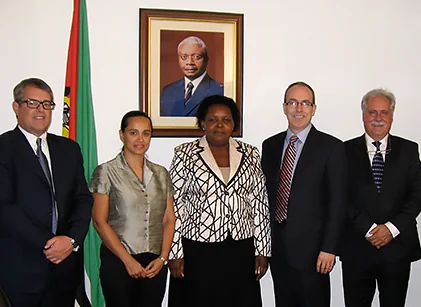
InterPraxis develops CSR Policy Framework for extractive sector companies in Mozambique.

InterPraxis recently won a competitive bid with the Mozambican Ministry of Mineral Resources (MIREM) to carry out a research study which will help inform the development of a national CSR policy framework for the extractives sector which will enable the industry to be more strategic in the design and delivery of its various CSR programs and initiatives, as well as to better support the goals of sustainable economic growth and poverty reduction.

InterPraxis Director chosen to Chair SROI Network Group

IP Director, David Simpson has been chosen to Chair the SROI Network (now Social Value International) Assurance Technical Committee. SROI is an approach to understanding and managing the value of social, economic, and environmental outcomes created by an activity or an organization. For more info click here.

InterPraxis in Middle-East

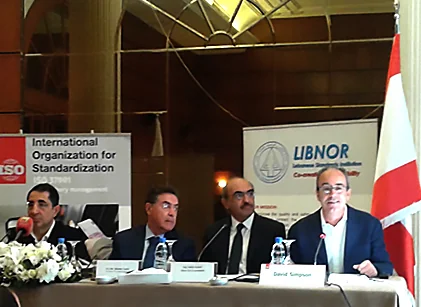
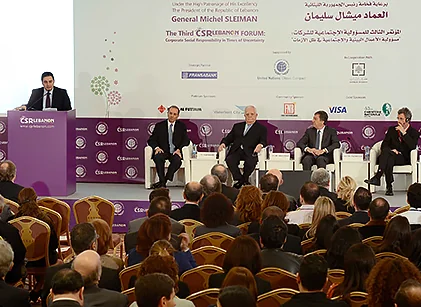
InterPraxis was invited to participate in two recent forums in Lebanon and Abu Dhabi to share expertise on designing effective stakeholder engagement systems for sustainability, and on international best practice in the area of social responsibility aligning to ISO 26000. InterPraxis Director, David Simpson has been a frequent participant at international events, with recent speaking engagements in Belgium, Chile, China, Korea, Mexico, Switzerland and the UK.

InterPraxis advising ACCA on integrated reporting.

World’s Largest Professional Accounting Body Selects InterPraxis to Provide Expertise on Integrated Reporting. The Association of Certified Charted Accountants (ACCA) is working with InterPraxis to help develop its thinking and processes around integrated reporting. Integrated Reporting is a new approach to corporate reporting that seeks to demonstrates the linkages between an organization’s strategy, governance and financial performance and the social, environmental and economic context within which it operates. ACCA is currently part of the pilot-programme being hosted by International Integrated Reporting Committee (IIRC).

Assisting South Korea SMEs in Moving Towards a “Green Economy”.

InterPraxis is working as part of an international team together with the Korean Productivity Centre (KPC) to provide practical guidance and tools to accelerate South Korean SMEs in their move towards the new green economy. As part of this work we have helped to develop and design a diagnostic tool for SMEs to assess their environmental, social, and governance performance against today’s most relevant sustainability and social responsibility performance indicators. We are now working with KPC to implement the programme and ensure that it responds to the practical needs of South Korea’s SME business community.

InterPraxis Carries Out Sustainability Assurance Engagement in Australia.

Together with Net Balance, we helped carry out a sustainability assurance engagement for a large Australian company with a broad range of assets in the retail, chemical and resources sector. The assurance engagement included an audit of the corporate headquarters as well as the various business subsidiaries. As part of our work we reviewed community engagements (particularly relating to mining activities) and carried out on-site reviews with local stakeholders.

InterPraxis conducts multi-stakeholder consultations for the Office of the CSR Counsellor for the Extractive Sector.

InterPraxis worked closely with the Office of the CSR Counsellor to help develop and design an effective dispute resolution process for the Canadian extractive sector and international host communities. Our work resulted in a shared set of principles and values for the Office and recommendations on multi-stakeholder governance with the parameters set down by the Federal Government.